

Precipitated Calcium Carbonate Plant
10000000.00 आईएनआर/Unit
उत्पाद विवरण:
X
मूल्य और मात्रा
- 1
व्यापार सूचना
- दिन
- No
- EXPORT PACKING
- , ,
- ISO9001:2015
उत्पाद वर्णन
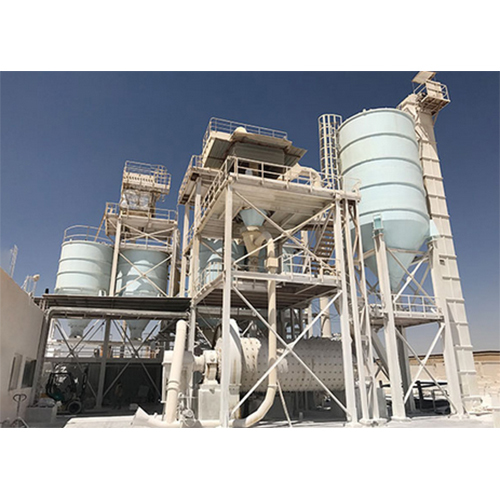
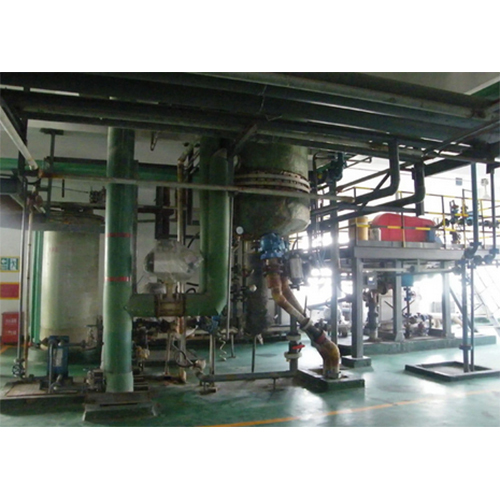
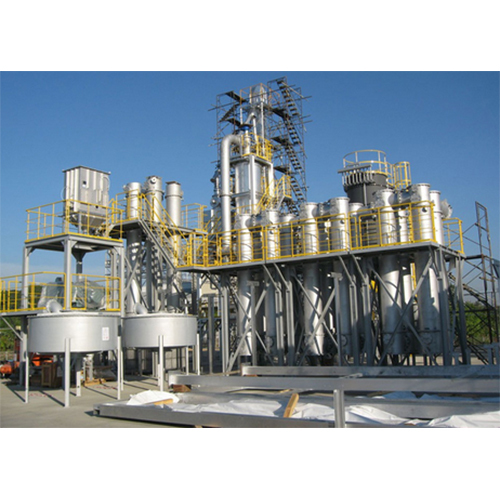
Kaspo Precipitated Calcium Carbonate Plant, one of the leading manufacturers in India. Our state-of-the-art facility is dedicated to producing high-quality precipitated calcium carbonate with exceptional purity and consistency. Our plant is equipped with advanced technology to ensure precision in particle size distribution and surface coatings, catering to various industries such as paper, plastics, paints, and more. With a focus on sustainability and environmental responsibility, we adhere to strict quality standards and efficient production processes. Trust Kaspo Precipitated Calcium Carbonate Plant for all your calcium carbonate requirements.
A precipitated calcium carbonate (PCC) process involves the following steps:
Calcination:Limestone is heated to high temperatures to convert it into calcium oxide (lime).
Slaking:Calcium oxide is mixed with water to create calcium hydroxide (slaked lime).
Carbonation:The slaked lime is then reacted with carbon dioxide gas to produce PCC.
Precipitation:The PCC is then separated from the remaining solution, washed, dried, and processed into the desired particle size.
A Precipitated Calcium Carbonate (PCC) plant is a specialized facility that manufactures calcium carbonate using a chemical process. This plant uses high-quality limestone or marble as raw materials and combines them with chemicals like calcium hydroxide to create PCC. The process involves controlled conditions such as temperature, pressure, and reaction time to produce a fine, white powder of calcium carbonate. PCC is widely used in various industries, including paper, plastics, paints, adhesives, and pharmaceuticals, due to its unique properties like high brightness, purity, and particle size distribution. Overall, a PCC plant plays a crucial role in providing this versatile mineral for a wide range of applications.
Advanced Manufacturing Process
Our PCC Plant utilizes lime calcination followed by carbonation, producing high-purity calcium carbonate. This controlled process ensures consistent, fine particle size suitable for industrial applications. Automated PLC control enables precise monitoring, although manual options are available for tailored requirements. The corrosion-resistant coating safeguards equipment longevity, even in demanding environments.
Flexible Production Capacity
Available with capacities from 2 TPH up to over 20 TPH, our systems support anything from small-scale operations to extensive production. Each plant is customized to client needs, maintaining strict moisture control so that the finished product contains less than 0.5% moisture. The result is superior quality PCC for diverse uses.
Comprehensive Support and Certification
As an ISO and CE certified manufacturer, exporter, and service provider, we offer full support from installation to after-sales. Our installation service ensures your plant is set up efficiently and ready for operation. The robust, corrosion-resistant design and seamless control systems guarantee compliance with international standards and reliable performance.
FAQ's of Precipitated Calcium Carbonate Plant:
Q: How does the Precipitated Calcium Carbonate (PCC) Plant operate to produce fine powder or slurry?
A: The PCC Plant employs lime calcination followed by carbonation, resulting in highly pure calcium carbonate as fine powder or slurry. Advanced PLC or manual control systems ensure consistent, high-quality output with moisture content below 0.5%.Q: What is the typical industrial usage of PCC produced by this plant?
A: PCC from our plant is commonly used in chemical processing, paper, plastics, and paint industries due to its controlled particle size and purity. The fine powder or slurry form supports diverse industrial needs requiring calcium carbonate.Q: When is installation service available for the PCC plant, and what does it include?
A: Installation service is provided upon order confirmation. Our team handles setup, commissioning, operator training, and post-installation support to ensure optimal plant functionality.Q: Where are these PCC plants exported and installed?
A: As a manufacturer, exporter, and supplier based in India, we serve domestic clients and export worldwide. Our installation and after-sales services accompany each deployment as needed.Q: What are the benefits of choosing a plant with a corrosion-resistant coating and certified standards?
A: Corrosion-resistant coating ensures longevity and minimal maintenance, even in harsh environments. ISO and CE certifications guarantee the plant meets global quality, safety, and performance standards, enhancing reliability and customer confidence.Q: How is product quality managed during the PCC production process?
A: PLC or manual control systems continuously monitor parameters such as particle size and moisture content, ensuring the finished product remains below 0.5% moisture and conforms to quality standards.Tell us about your requirement

Price: Â
Quantity
Select Unit
- 50
- 100
- 200
- 250
- 500
- 1000+
Additional detail
मोबाइल number
Email

EPC And Turnkey Project Business अन्य उत्पाद

संपर्क करें

- बी-8, साइट सी, यूपीएसआईडीसी सूरजपुर औद्योगिक क्षेत्र,ग्रेटर नोएडा - 201306, उतार प्रदेश।, भारत
- फ़ोन : 08045802340

- श्री। पी. का (निदेशक)
- मोबाइल :08045802340
- जांच भेजें
 जांच भेजें
Kaspo Engineering Private Limited
सर्वाधिकार सुरक्षित.(उपयोग की शर्तें)
इन्फोकॉम नेटवर्क प्राइवेट लिमिटेड . द्वारा विकसित एवं प्रबंधित
इन्फोकॉम नेटवर्क प्राइवेट लिमिटेड . द्वारा विकसित एवं प्रबंधित


